Must Have Tools for Every Hot Tub Cover Owner: The Ultimate Guide
The acquisition of a hot tub represents a significant investment in personal wellness and property value.Central to the preservation of this investment is the hot tub cover, a component that serves as a multi-functional barrier against thermal loss, environmental contamination, and safety hazards. However, the efficacy of a cover is not a static quality; it is a variable state that depends heavily on the tools and maintenance protocols employed by the owner. Without proper care, the premium materials used in modern covers, such as 30oz marine-grade vinyl and high-density Expanded Polystyrene (EPS) foam, are subject to rapid degradation.
This report provides a granular analysis of the tools required to maintain a hot tub cover’s structural integrity and thermal performance. It explores the mechanical, chemical, and diagnostic equipment that constitutes an expert-level maintenance kit, while also examining the second-order effects of tool neglect on energy consumption and equipment lifespan. For owners seeking a hot tub cover replacement, understanding these tools is essential to ensure that the new unit achieves its full design life of five to seven years.
Mechanical Integration: The Cover Lifter as a Structural Safeguard
The most critical mechanical tool for any spa owner is the cover lifter. Often perceived as a luxury for convenience, the cover lifter is, in reality, a structural necessity that mitigates the primary causes of physical damage: dragging, dropping, and hinge stress. A standard hot tub cover weighs between 50 and 70 pounds when dry, but its awkward dimensions make it difficult for a single person to handle without subjecting the seams and foam core to uneven torque.
Engineering and Categories of Lifter Systems
Mechanical lifters are categorized based on their clearance requirements and the level of assistance they provide. The selection of a lifter must correspond to the specific environment and the physical capabilities of the users.
|
Lifter Type |
Mechanism of Action |
Clearance Required |
Key Benefit |
|
Manual Pivot |
Utilizes a bar mounted to the cabinet or base; the cover is folded and rotated. |
10 – 18 Inches |
High durability and simple installation. |
|
Hydraulic/Pneumatic |
Uses gas-filled shocks to bear 90% of the cover's weight. |
6 – 12 Inches |
Allows for single-handed operation; minimizes user strain. |
|
Shelf/Basket |
Stores the cover horizontally beside the tub without lifting it high. |
Variable |
Ideal for low-clearance areas or sunken decks. |
|
Under-Mount/Freestyle |
Base plate slides under the spa; weight of the water secures it. |
18+ Inches |
Zero drilling required into the spa cabinet. |
The use of a hydraulic lifter provides a "soft-stop" mechanism that prevents the cover from slamming against the ground or the side of the tub, which is a frequent cause of foam core fractures and vapor barrier punctures. Furthermore, lifters ensure that the cover remains elevated during use. Keeping the cover off the ground prevents it from collecting abrasive dirt, gravel, or organic mulch that can scuff the vinyl or introduce bacteria into the spa water upon closure.
Structural Reinforcement Tools
Advanced lifter systems often require "lifter plates" or reinforcement hardware. These are specialized metal plates that distribute the mechanical force exerted by the lifter arms across a larger surface area of the cover. Without these plates, the repeated stress of lifting can cause the vinyl at the attachment points to stretch and eventually tear, allowing moisture to reach the interior foam.
For owners of custom hot tub covers, the integration of a lifter is arguably the most effective way to protect the "millimeter-perfect" fit provided by custom engineering. By ensuring the cover is always replaced in the exact same orientation with minimal force, the owner preserves the airtight seal that is critical for energy efficiency.
Chemical Defense: UV Protectants and Surface Cleaners
The exterior of a hot tub cover is a battlefield between high-quality polymers and destructive environmental forces. Ultraviolet (UV) radiation from the sun is the most potent catalyst for material failure, causing the vinyl to lose its plasticizers and become brittle.
The Science of Vinyl Protectants
Standard household cleaners often contain petroleum distillates, alcohol, or silicone, all of which are detrimental to marine-grade vinyl. Petroleum-based products can dissolve the protective coatings that make the vinyl UV-resistant, while silicone can create a greasy film that traps heat and accelerates cracking.
The mandatory tool for surface maintenance is a dedicated UV protectant, such as 303 Aerospace Protectant or similar water-based conditioners. These products function as a high-SPF sunscreen for the cover, creating a molecular barrier that reflects harmful rays while keeping the vinyl fibers supple.
|
Protectant Property |
Effect on Vinyl |
Application Frequency |
|
Water-Based Formula |
Safely absorbs into the material without stripping oils. |
Every 3–4 months. |
|
UVA/UVB Blockers |
Prevents fading, structural brittleness, and "sun-rotting." |
Every season change. |
|
Static Repellent |
Reduces the accumulation of dust and environmental pollutants. |
After every deep clean. |
|
Color Restorer |
Maintains the aesthetic value of the spa installation. |
As needed. |
Specialized Cleaning Implements
To apply these protectants effectively, the surface must first be cleared of abrasive contaminants. This requires a specific set of cleaning tools that do not damage the vinyl grain.
-
Soft Scrub Brushes: These brushes remove bird droppings and tree sap without creating the micro-scratches that trap moisture.
-
Microfiber Cloths: Ideal for applying protectants evenly and buffing the surface to a clean finish.
-
Magic Erasers: These are effective for removing the "scum line" that forms along the skirt of the cover where it meets the spa cabinet, primarily caused by body oils and mineral deposits.
-
Long-Handled Scrubbers: These allow the owner to reach the center of large covers, particularly on swim spas, without placing weight on the cover itself.
Applying weight to the center of a cover either by leaning on it during cleaning or by placing heavy items on top can cause the internal EPS foam to bow. This creates a "dish" effect where rainwater pools, leading to sagging and further structural degradation.
The Internal Micro-Climate: Underside Protection and Vapor Barriers
While the top of the cover faces the sun, the underside faces a constant barrage of heat, humidity, and chemical vapors. This environment is highly corrosive and is the primary reason why covers become "waterlogged".
The Chemical Gas Cloud Phenomenon
When a hot tub is shocked or when sanitizer levels are high, a concentrated cloud of chemical vapors forms in the small gap between the water and the cover. This "gas cloud" is highly oxidizing and can eat through low-quality plastic liners in a matter of months.
-
Venting Tools: Propping the cover open for 20 to 30 minutes after chemical treatment is a necessary maintenance step that allows these gases to escape.
-
Vapor Barrier Upgrades: Expert-level covers, such as those provided for a hot tub cover replacement, utilize a 6-mil plastic vapor seal that is heat-sealed to the foam core.
-
Double-Wrapped Cores: For owners in high-usage environments, a double-wrapped core provides a secondary line of defense, potentially extending the lifespan of the insulation by up to 20%.
Floating Thermal Blankets
One of the most underutilized yet effective tools is the floating thermal blanket. This is a thin layer of insulating material that sits directly on the water's surface, separate from the main cover.
The thermal blanket serves as a sacrificial barrier. It bears the brunt of the chemical evaporation and condensation, preventing the majority of moisture from ever reaching the main cover. This tool is a primary defense against waterlogging, as it significantly reduces the vapor pressure against the cover's underside. Additionally, by trapping heat at the water's surface, it reduces the energy required to maintain the set temperature, offering a clear return on investment through lower utility bills.
Environmental Shielding: Seasonal and Protective Accessories
In regions with extreme winters or intense summers, the primary cover requires additional protection from the elements.
Spa Caps and Protection Bags
A spa cap is a lightweight, durable polyethylene cover that fits over the standard hot tub cover. It is particularly valuable during the winter months.
-
Snow Management: Removing snow from a standard cover can be dangerous; if a shovel is used, it can easily tear the vinyl. A spa cap allows the owner to simply slide the snow off or use a soft broom without risk of damage.
-
UV Shielding: In the summer, the spa cap acts as a sacrificial layer against the sun, ensuring that the expensive marine-grade vinyl of the main cover is never directly exposed to the most intense radiation.
-
Protection Bags: For owners who close their spas for the season, a full protection bag covers the entire unit, protecting the side panels as well as the lid from moisture intrusion and pest infestation.
Wind Security and Safety Straps
In coastal or high-altitude areas, wind can be as destructive as the sun. If wind catches the edge of a cover, it can create a "sail" effect that snaps the hinges or blows the cover off entirely.
-
Heavy-Duty Wind Straps: These are extra-long straps that cross over the entire width of the cover and anchor to the spa cabinet with locking buckles.
-
Storm Straps: These provide additional downward pressure, ensuring that the seal remains airtight even during high-velocity gusts, which prevents the heat loss that occurs when a cover is partially lifted.
For owners of custom hot tub covers, integrating four or more locking straps is a standard safety recommendation to ensure the unit remains secure during inclement weather.
Diagnostic Analysis: Identifying the Point of No Return
Every spa owner must possess the tools and knowledge to identify when a cover has failed. Continuing to use a failed cover is a massive economic drain, as the lost energy costs often exceed the price of a replacement within 12 to 18 months.
The Weight and Sagging Test
The most common sign of failure is waterlogging. When the vapor barrier fails, the EPS foam core acts like a sponge, absorbing moisture and losing its R-value (insulating capacity).
|
Sign of Failure |
Root Cause |
Economic Impact |
|
Heavy Weight |
Saturated foam core. |
Heater runs 50% more; high utility bills. |
|
Sagging Center |
Broken or bowed foam panels. |
pooling water accelerates vinyl rotting. |
|
Musty Odor |
Mold/Mildew infestation inside the core. |
Health risk; contamination of spa water. |
|
Steam Escaping |
Warped edges or compressed seals. |
Constant heat loss; pump and heater overwork. |
A simple diagnostic tool is a bathroom scale or a simple "push test." If a section of the cover feels spongy or makes a squishing sound when pressed, the insulation is compromised. At this point, the owner should seek a hot tub cover replacement to restore the energy efficiency of the spa.
Repair vs. Replace Logic
Minor issues can be addressed with a vinyl repair kit, which includes patches and specialized adhesive. However, the analysis shows that once the foam core is waterlogged, repairs are largely cosmetic. Replacing the foam panels alone is often 70% of the cost of a brand-new cover and is difficult to execute correctly. Therefore, for structural or moisture-related failures, a full custom hot tub covers order is the more sustainable long-term solution.
Economic Impact and Energy Conservation Analysis
The primary function of a hot tub cover is energy conservation. In a thermodynamic sense, the cover is a barrier that prevents the transfer of heat from the water to the colder ambient air. The efficacy of this barrier is measured in R-value.
The Cost of Inefficiency
A high-quality, dry cover can reduce heating costs by up to 75% compared to an uncovered spa or one with a waterlogged lid. On average, a new, well-fitted cover saves a homeowner between $72.50 and $85.00 per year in electricity costs.
|
Cover State |
Annual Energy Cost (Estimated) |
Insulation Efficacy |
|
New/Dry Cover |
$150 – $250 |
100% |
|
Slightly Damp |
$300 – $400 |
60% |
|
Fully Waterlogged |
$500 – $750 |
<10% |
The use of maintenance tools specifically the UV protectant and the thermal blanket extends the "New/Dry" state of the cover by several years. For an initial investment of less than $100 in maintenance tools, an owner can prevent hundreds of dollars in energy waste over the life of the cover.
Equipment Lifespan Ripple Effects
A failing cover does more than just raise the electric bill; it places immense strain on the spa's mechanical components. When heat is constantly escaping, the heater and circulation pump must run nearly 24/7 to maintain the set temperature. This constant cycling significantly shortens the lifespan of these expensive components, potentially leading to repairs that cost upwards of $500 to $1,000. In this context, a $400 hot tub cover replacement is actually a protective measure for the entire mechanical system.
Conclusion and Strategic Recommendations
The maintenance of a hot tub cover is an exercise in asset management. To maximize the value of the investment, owners must move beyond passive ownership and adopt a toolkit that addresses the mechanical, environmental, and chemical threats to the cover’s integrity.
-
Mechanical Protection: Every spa should be equipped with a hydraulic or manual cover lifter to eliminate the physical stresses of manual handling.
-
Chemical Preservation: The use of water-based UV protectants is non-negotiable for outdoor installations.
-
Vapor Management: Floating thermal blankets and strict post-shock venting protocols are essential to prevent the waterlogging that destroys the insulation value.
-
Diagnostic Vigilance: Regular weight checks and water chemistry monitoring allow owners to intervene before minor issues become catastrophic failures.
For those whose covers already exhibit signs of sagging, excessive weight, or vinyl brittleness, the most cost-effective path is a professional hot tub cover replacement. By selecting custom hot tub covers that are engineered to the specific millimeter of the spa’s dimensions, owners can reset the clock on their spa’s efficiency and ensure another five to seven years of worry-free relaxation.
Custom-Made for a Perfect Fit
Every spa is unique, which is why we don’t believe in "one size fits all." We specialize in custom hot tub covers designed using advanced CAD (Computer-Aided Design) technology. This ensures that every cover is built to your exact dimensions, providing a snug, airtight seal that locks in heat and keeps out debris.
If your current cover is heavy, waterlogged, or cracked, it’s time for a hot tub cover replacement. Our streamlined ordering process makes it easy to upgrade to a handmade, high-performance cover that will restore your spa’s efficiency and aesthetic appeal.

Heavy-Duty Handles
Double-stitched, marine-grade vinyl for maximum durability and a premium look.

Safety Straps
Reinforced, color-matched straps designed to withstand high winds and heavy use.

Reinforced Stitching
Double-stitched seams and hinges to ensure your cover lasts for years.
Other Guys
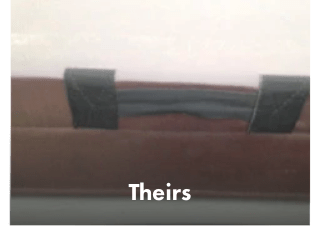
Their cheap handles are more prone to wear and tear and are known to rip off within the first two years plus the appearance speaks for itself.

Our competition uses low-quality straps that are prone to breakage and often times do not match the color of the spa cover.

Their use of single stitching and exposed shells can ultimately cause cracking and heat loss, costing you more on your electric bill.
Why Choose MySpaCover?
We don’t just claim to have the best quality, we prove it through superior materials and craftsmanship. Every cover we produce is "Made in the USA" and built to exceed industry standards, ensuring your investment is protected for years to come.
We’ve found a few great alternatives to your selected spa cover that can reach you even quicker!
Here are the closest available alternatives based on your preferences.